 Minardi Piume
Materials
What we process, family by family: species, typical fill power, uses and certifications. How we process it, from raw material to certified lot, is onThe process.
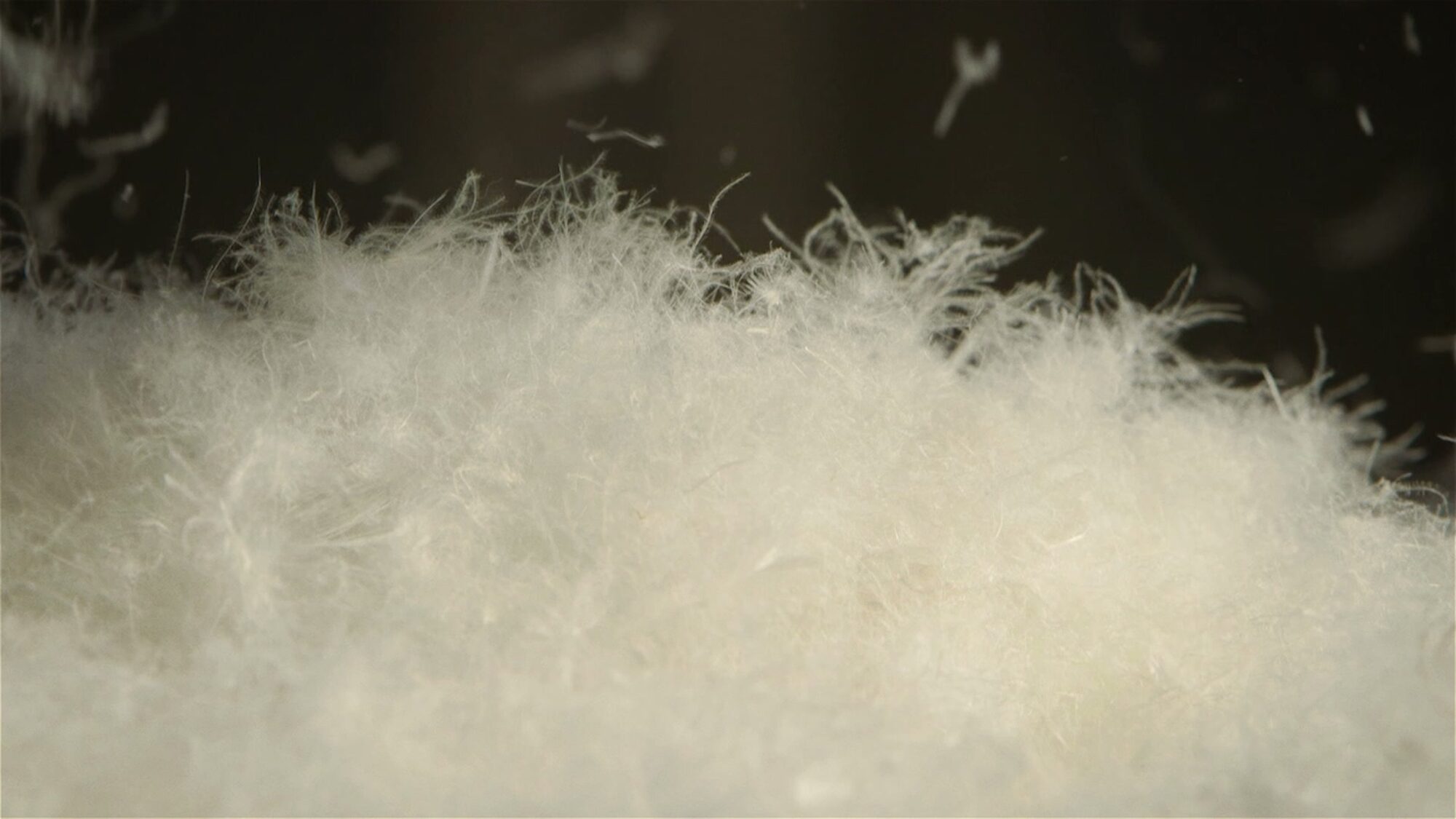
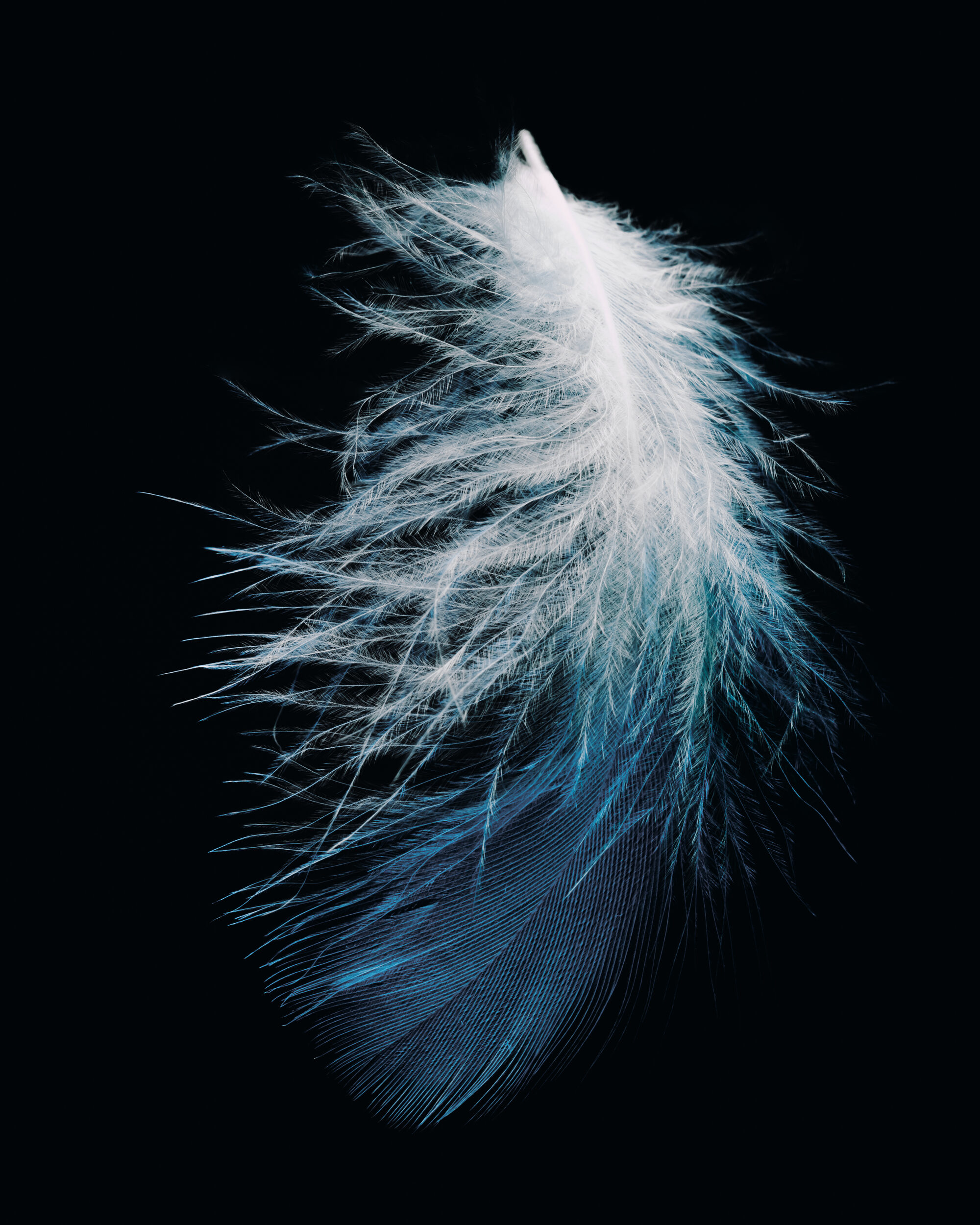
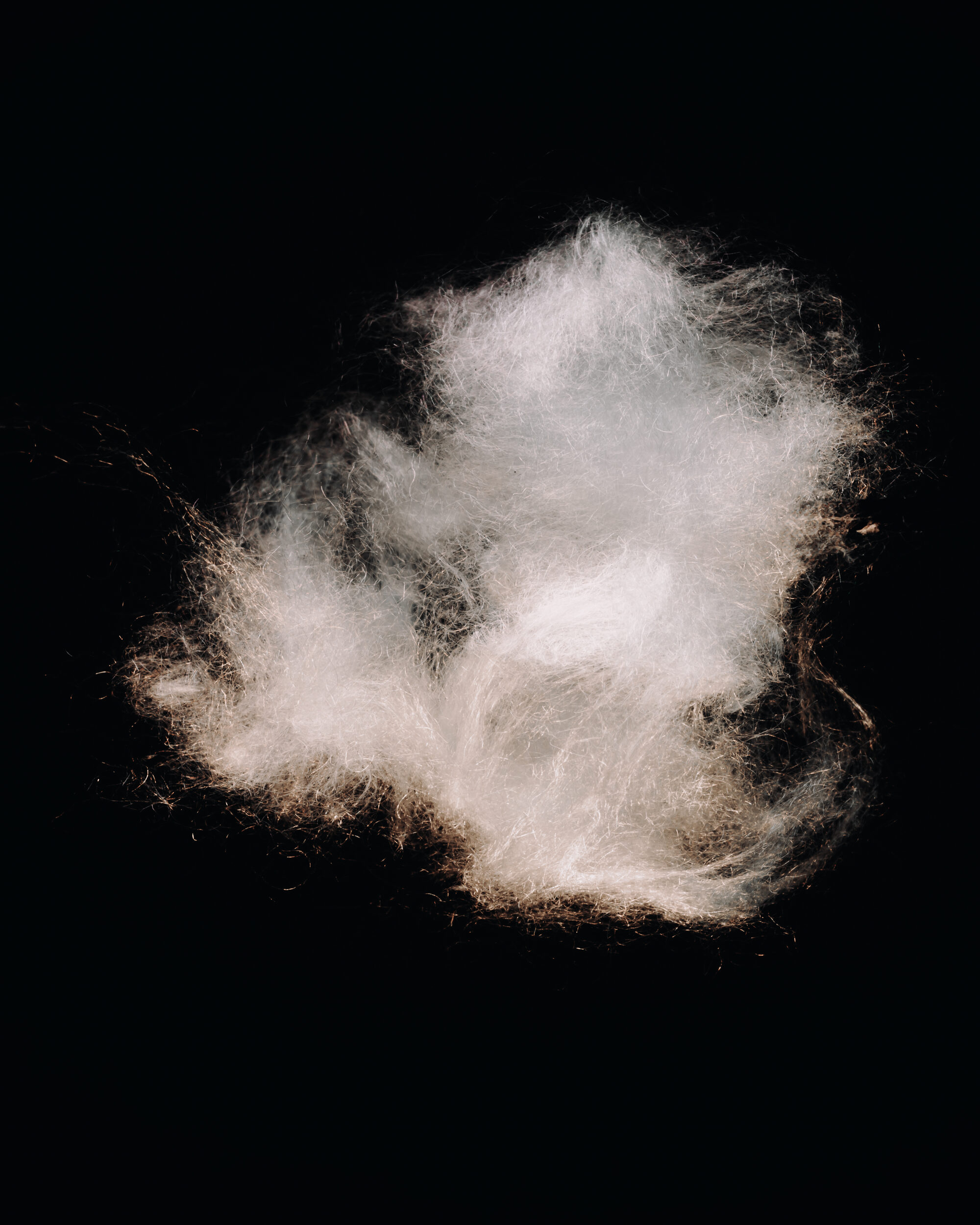
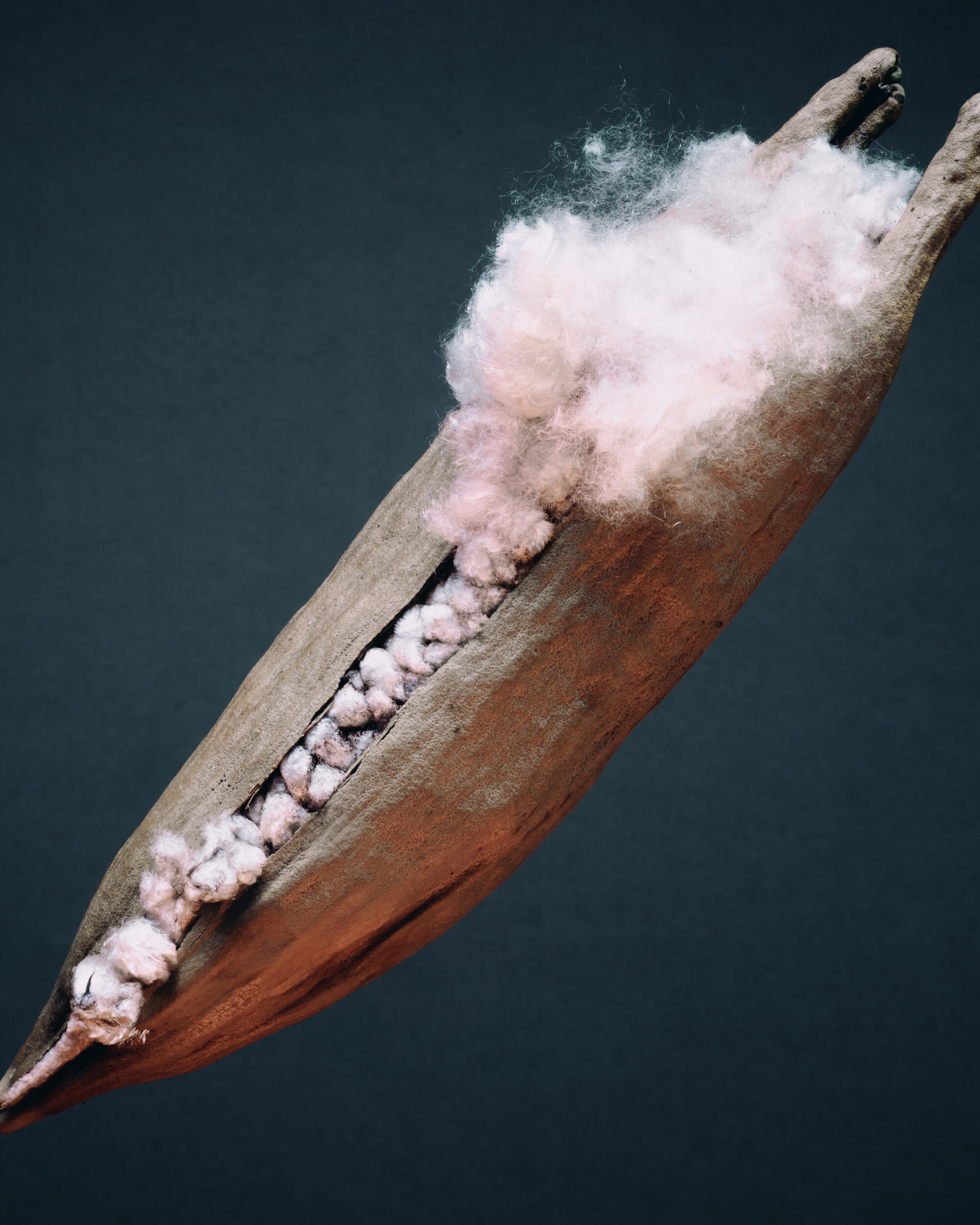
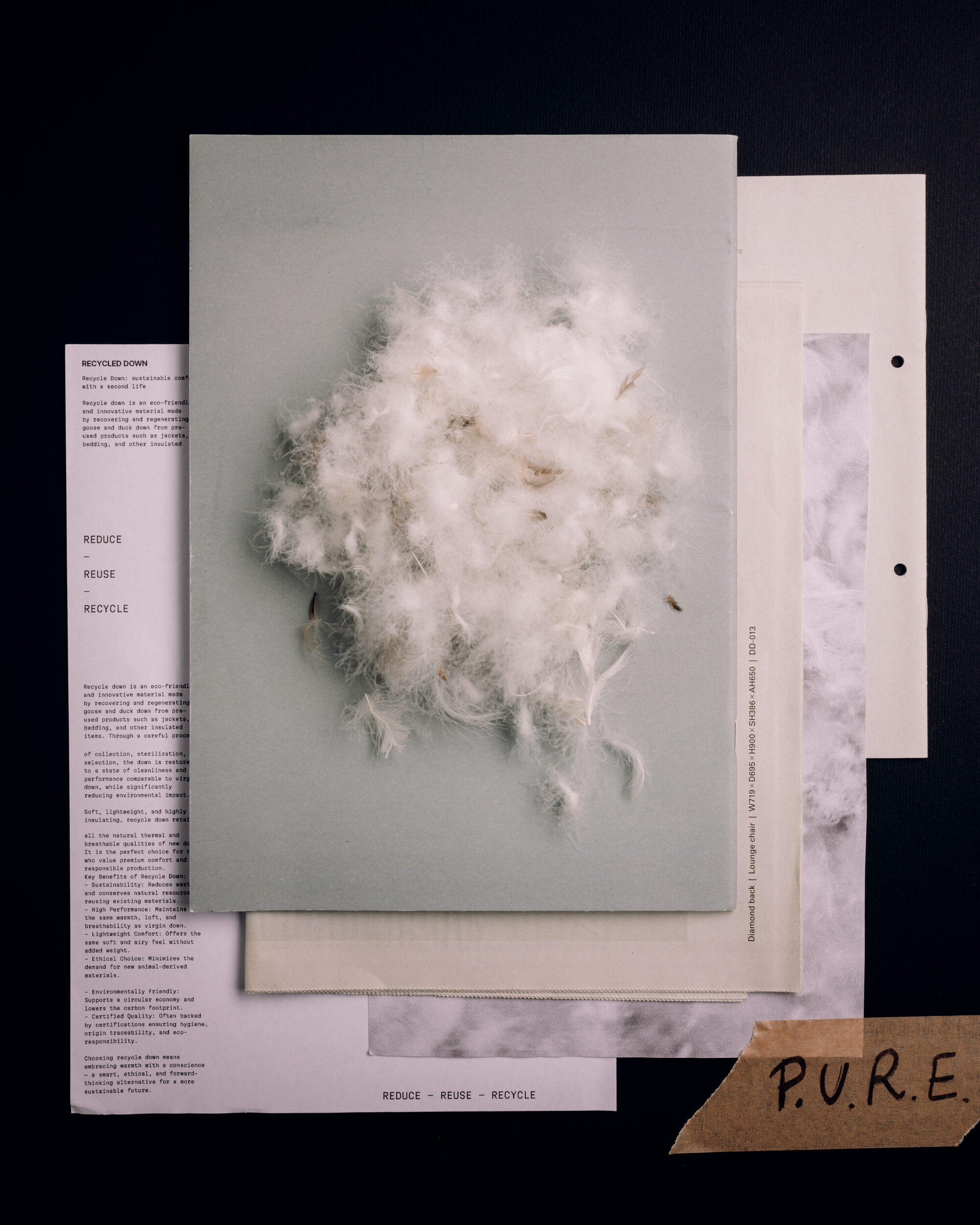
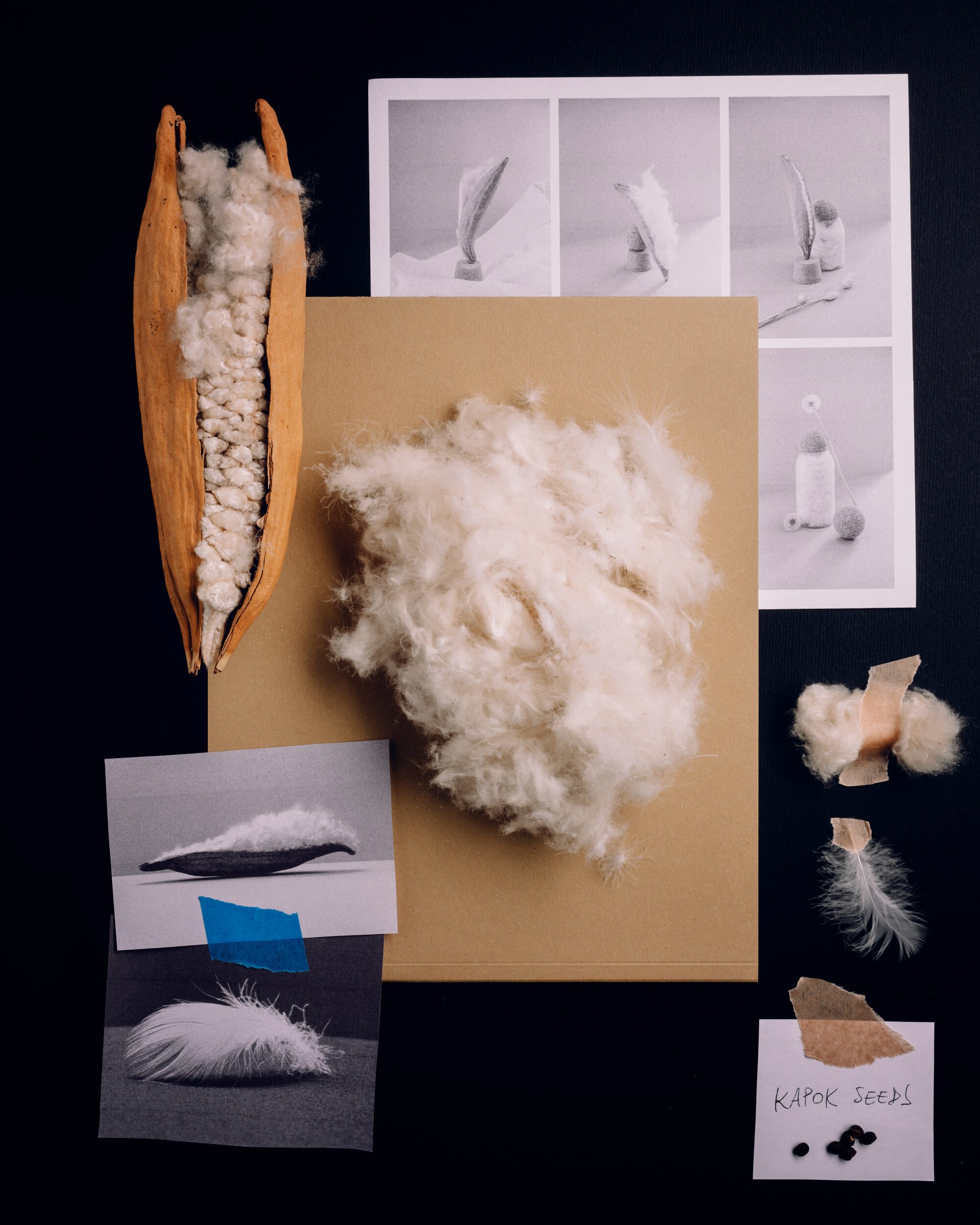
Up close
The raw material as it is: feather, down cluster, the kapok pod, regenerated P.U.R.E.® and the Flower Down® blend.
The families
Technical data, species and ideal uses of every family processed by Minardi Piume.
Down and feather
Goose and three duck families. Down and feather are a by-product of the food chain, never the reason for farming.
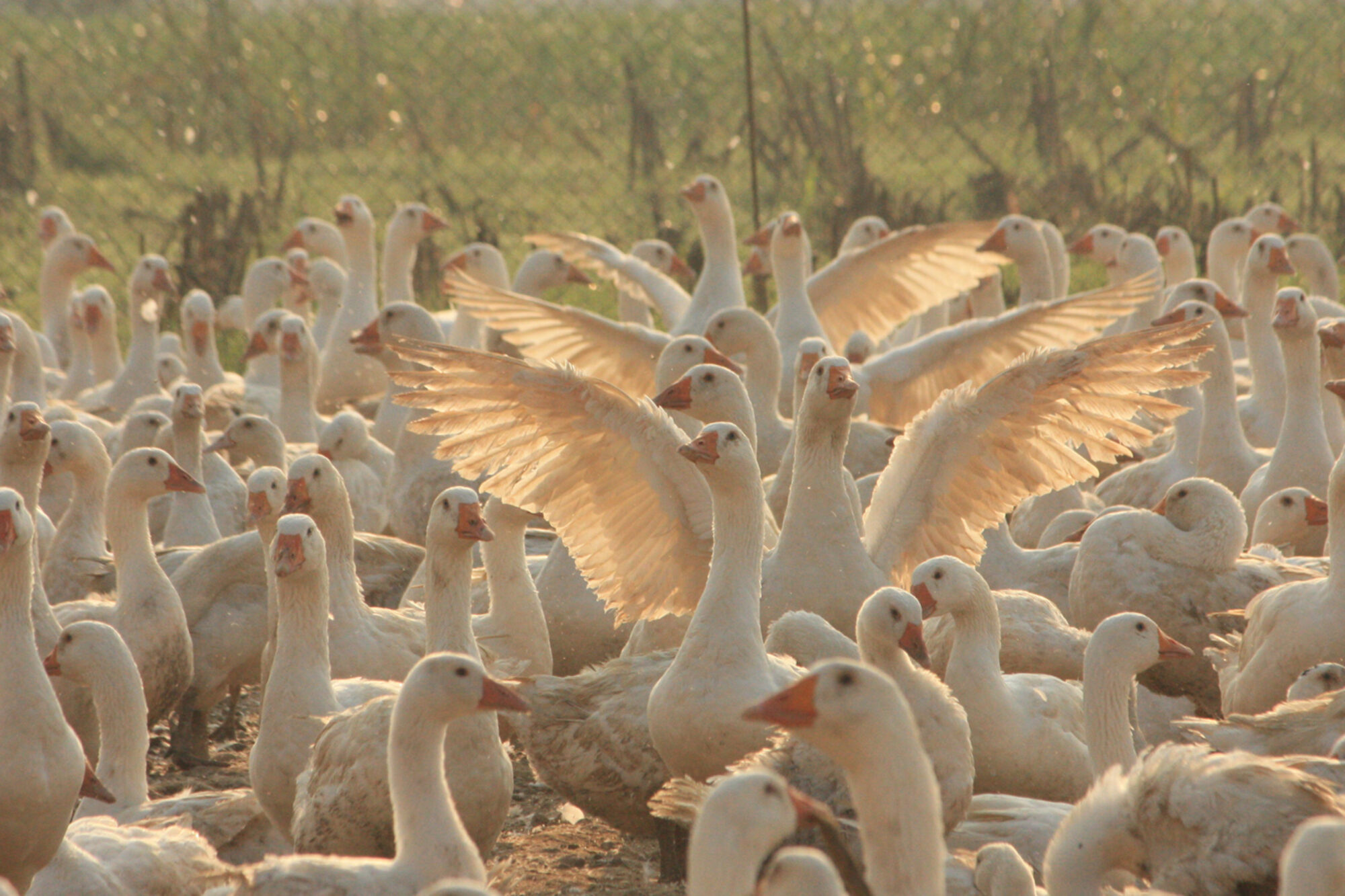
Goose
- Typical FP
- ~850
- Species
- Anser anser domesticus
- Ideal uses
- The most prized fill: luxury outerwear, fashion, premium bedding.
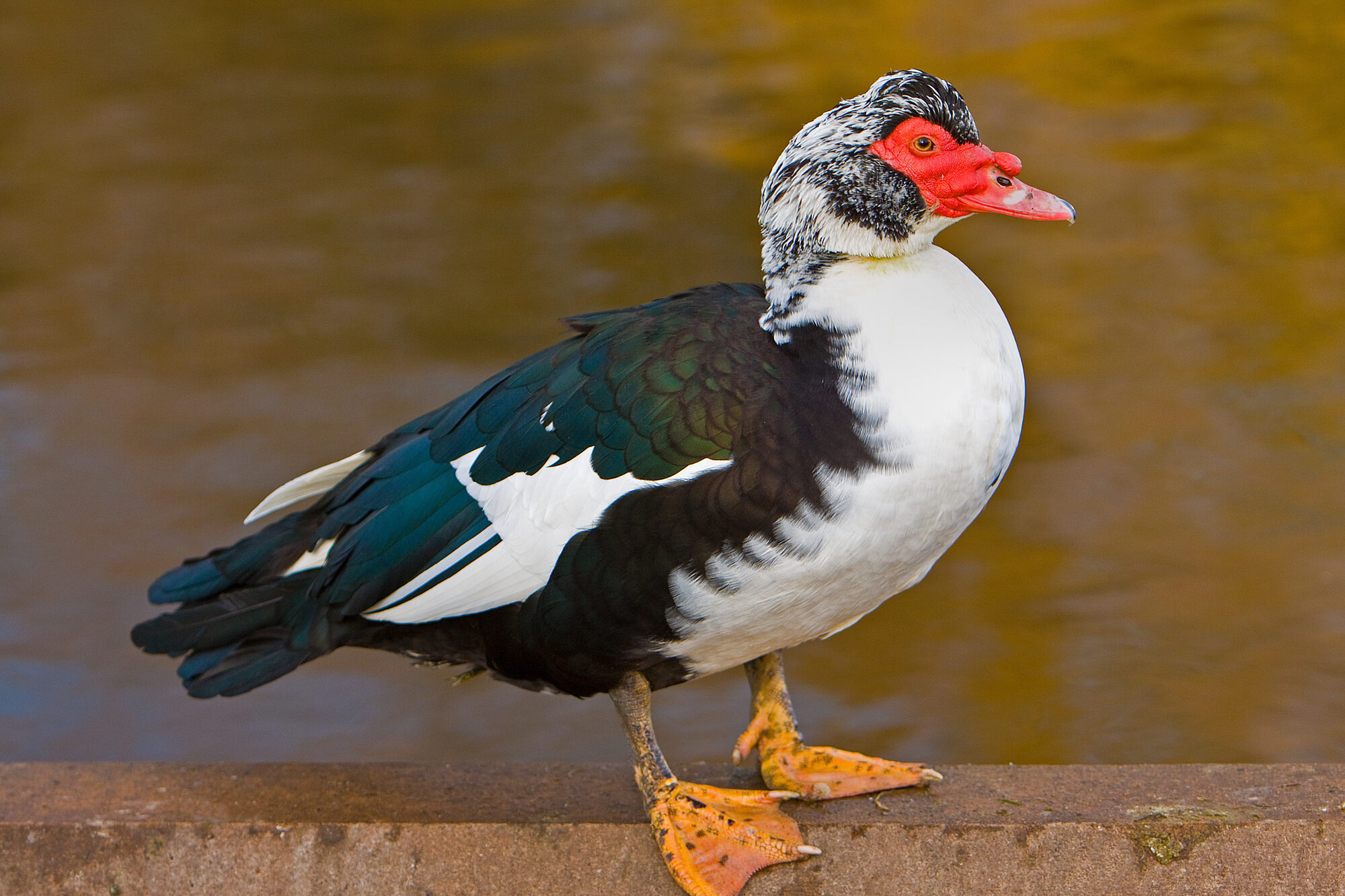
Country duck (Muscovy)
- Typical FP
- ~800
- Species
- Cairina moschata
- Ideal uses
- Free-range country duck: quality close to goose, for fashion outerwear and bedding.
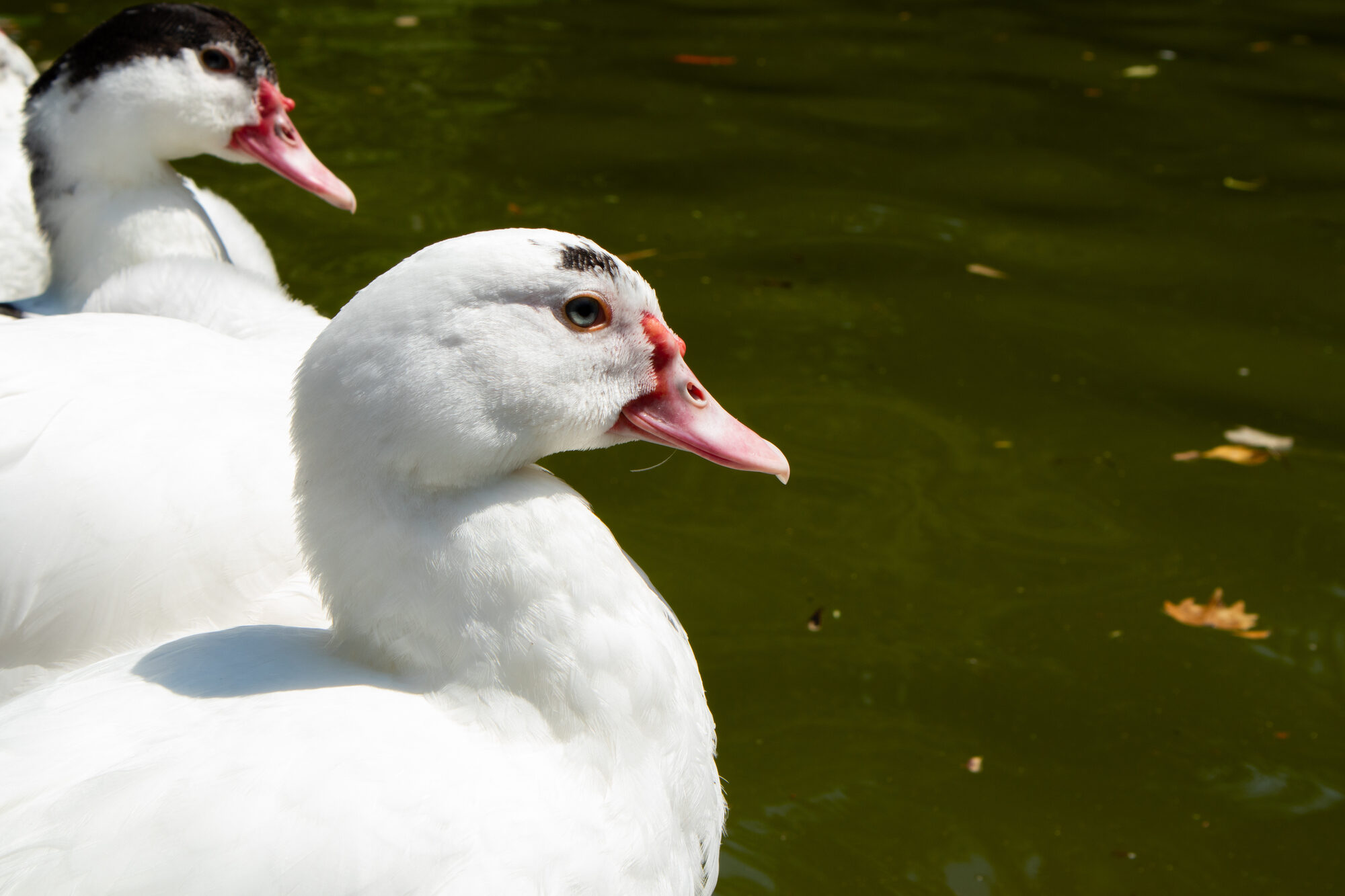
Barbary duck
- Typical FP
- ~780
- Species
- Cairina moschata
- Ideal uses
- From industrial farming: high quality for fashion outerwear and bedding.
This farming supply chain falls outside the scope of the RDS scheme.
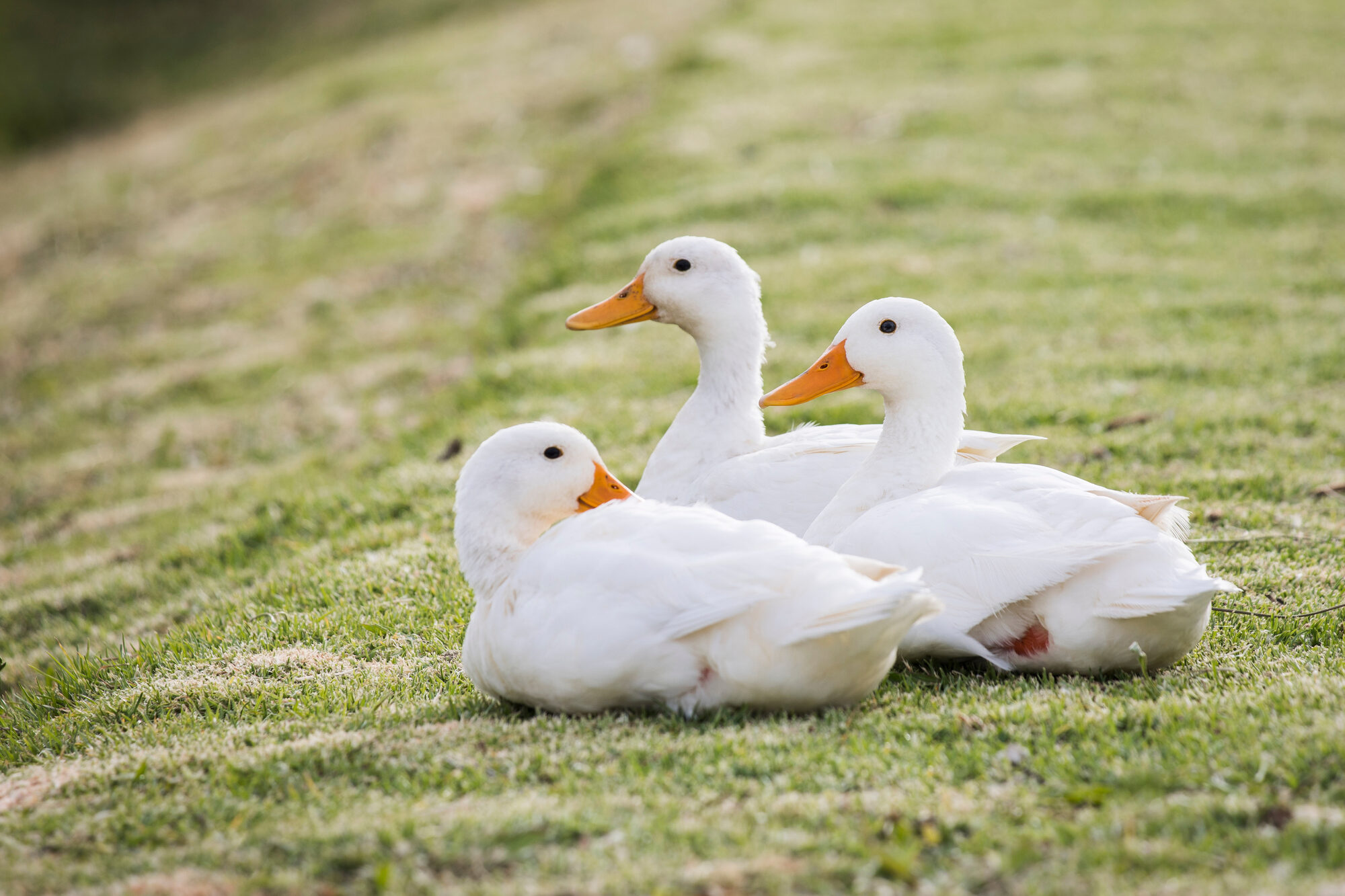
Pekin duck
- Typical FP
- ~700
- Species
- Anas platyrhynchos domesticus
- Ideal uses
- The most widespread species: smaller cluster, volume bedding and outerwear.
Recycled and plant fibres
Down regenerated in our recycling department, the patented blend with kapok, and plant fibres.
P.U.R.E.®
- Typical FP
- ~750
- Species
- Recycled post-consumer down
- Ideal uses
- Sanitised and reprocessed in our internal recycling department: capacity 1,000,000+ kg/year, 843,000 kg regenerated in 2025.
Typical FP higher than Pekin at equal down content.

Flower Down®
- Typical FP
- ~750
- Species
- Patented down + Kapok blend
- Ideal uses
- Patented high-FP blend: bedding and outerwear combining down softness with kapok lightness.
Patented Minardi Piume technology.
Kapok & plant fibres
- Typical FP
- —
- Species
- Ceiba pentandra and other plant fibres
- Ideal uses
- The lightest plant fibre in the world: bedding and vegan fillings, botanical alternatives to down.
Typical fill power figures are measured in our own laboratory to the IDFB method, in a conditioned climatic chamber. Figures obtained under other measurement standards are not directly comparable.
Our brands
P.U.R.E.® Recycled Down
Post-consumer recycled down, GRS certified, sanitised and regenerated in our own recycling department. The name stands for Pure Unique Recycled Eco-down.
Flower Down®
A patented blend of down and kapok: the loft of down with the lightness of the plant fibre, measured for fill power by a recognised laboratory (below).
Flower Down®, measured
In a fill power test run by an EDFA-recognised laboratory in 2020, Flower Down® reached 750 cu.in against roughly 450 cu.in for polyester measured under the same protocol, in the same test.
Kapok
The plant fibre that lightens the blend grows wild in tropical forests, with no artificial irrigation and no pesticides, and is harvested by hand by local communities.
Not only raw material
Duvets, quilts and pillows leave our bedding atelier finished: the same down, sewn into fabrics we select and test ourselves.
Discover the bedding atelier →